For finance organizations, SAP S/4HANA migration is no longer just an IT initiative. It directly impacts reporting speed, compliance readiness, operational efficiency, and long-term financial agility. The investment is significant, often the largest technology spend of a decade. Yet the consequences of inaction are quietly accelerating: ageing ECC systems that can't support real-time close, AI-driven forecasting, or regulatory reporting at the speed regulators now expect.
At ChainSys, we've structured ROI frameworks for financial services firms, insurance companies, banks, and corporate finance functions navigating this transition. The finding is consistent: organizations that treat S/4HANA migration as a cost center miss 60–70% of the available value. Those that treat it as a finance transformation platform capture returns that dwarf the migration investment. This blog shows you how to be in the second group.
Why Finance Organizations Can’t Afford to Stay on SAP ECC
Enter the Intelligent Finance Core with SAP S/4HANA
SAP S/4HANA is SAP’s next-generation ERP platform built to help finance organizations modernize operations, accelerate reporting, and enable real-time financial decision-making. Powered by the SAP HANA in-memory database, S/4HANA simplifies complex finance landscapes by unifying financial data, automating core processes, and delivering faster insights across the enterprise.
Key Finance Capabilities of SAP S/4HANA
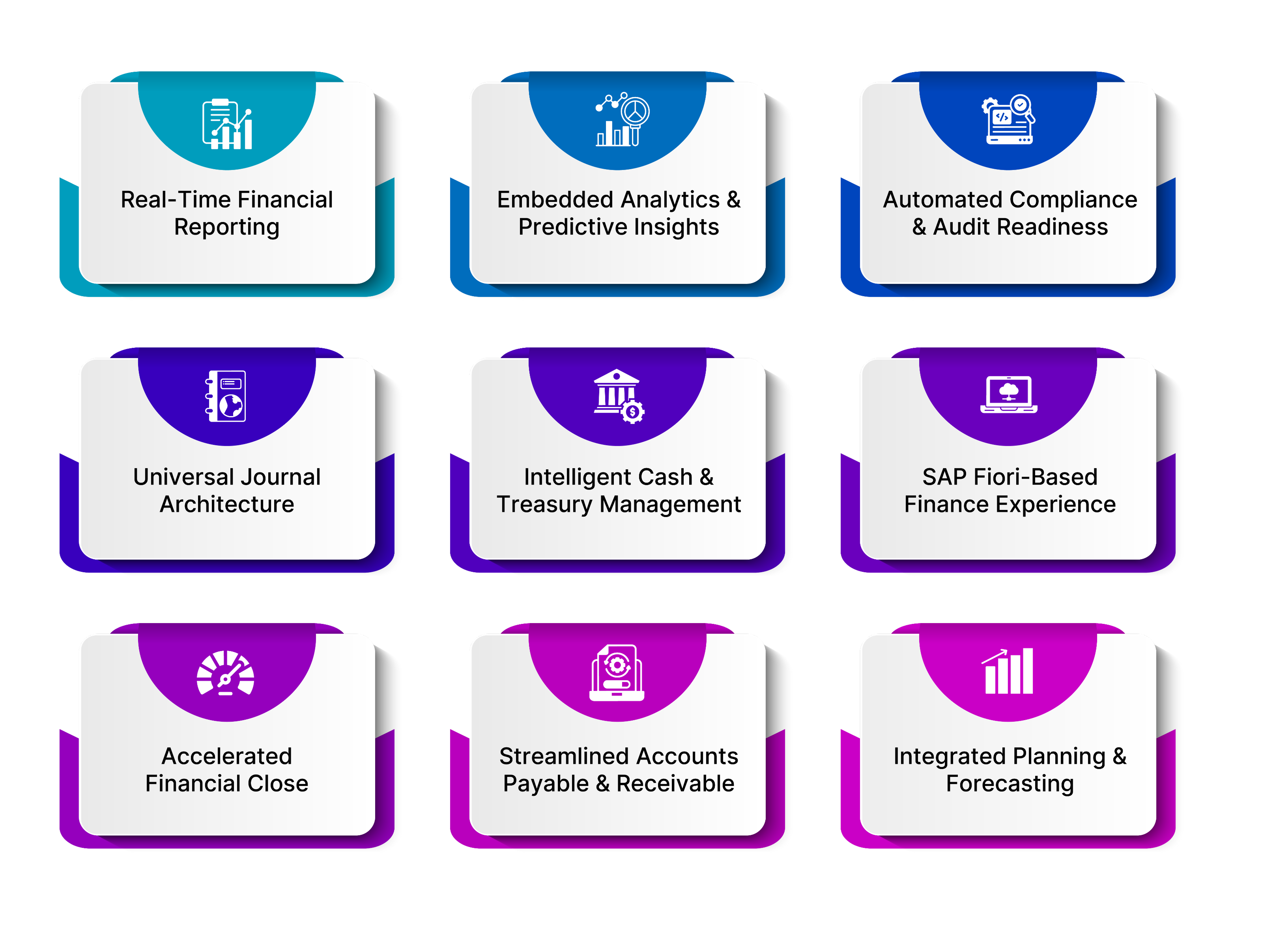
Choosing the Right Migration Platform for SAP ECC to S/4HANA Transformation
Introducing the ChainSys Smart Data Platform
The ChainSys Smart Data Platform is purpose-built to simplify and accelerate SAP ECC to S/4HANA transformations through intelligent automation, finance-focused data governance, and enterprise-grade migration capabilities. The convergence of all the data management services offered by ChainSys, such as migration, data quality, validation, governance, and testing into a single solution, makes it the most suitable software for finance departments in search of low risk, financial stability, and audit-readiness during migration projects.
Your ECC → S/4HANA Migration Framework with ChainSys

Unlocking Measurable Finance ROI with ChainSys for SAP ECC → S/4HANA Transformation
Best Practices for Finance Leaders
The Intelligent Enterprise Finance Vision
SAP ECC to S/4HANA migration is no longer only a technological transition; it has now become a finance transformation project that will have implications on the efficiency, compliance, reporting, and future flexibility of the organization. ChainSys provides a fast track to migrate, automatically reconcile, ensure high-quality data, minimize operational risk, and optimize the return on the S/4HANA investment.
Ready to Modernize Your Finance Operations?
Request a personalized demo today.
Frequently Asked Questions
Q: How does ChainSys help maximize ROI from SAP ECC to S/4HANA migration?
A: ChainSys achieves ROI increase for SAP ECC to S/4HANA migration using intelligent automation, governance of finance data, validation for reconciliation, artificial intelligence-enabled transformation processes, and migration accelerations.
Q: Can finance operations continue during migration?
A: Yes. Migration is conducted using phased deployments, parallel validation systems, and cutover management strategies by ChainSys to ensure that minimal interruption of operations takes place during migration.
Q: How does ChainSys support compliance during SAP migration?
A: Governance, auditability, tracking for reconciliation, access controls, and enforcement of retention policies can be built into ChainSys migration process workflows for ERP transformation compliance.
Q: Does all historical finance data need to be migrated?
A: Not necessarily. The data migration assessment process determines what needs to be migrated, archived, governed, or retired in SAP migration.
Q: How does ChainSys support AI-driven finance transformation?
A: ChainSys supports the modernization of enterprise data foundations in SAP S/4HANA, necessary for predictive analytics, automation, anomaly detection, and real-time reporting.